Geography
Intent
At Ditchling we believe that Geography helps to provoke and provide answers to questions about the natural and human aspects of the world. Children are encouraged to develop a greater understanding and knowledge of the world, its interconnectedness and their place in it. The geography curriculum at Ditchling enables children to develop knowledge and skills that are transferable to other curriculum areas and which can and are used to promote their spiritual, moral, social and cultural development. Geography is, by nature, an investigative subject, which develops an understanding of concepts, knowledge and skills.
Geography Quality Mark Gold Award
We are delighted to have been awarded the Geographical Association’s Gold Quality Mark, recognising the high quality of geography teaching and learning across our school.
This prestigious award celebrates our commitment to providing an engaging, ambitious and enriching geography curriculum that inspires children to develop a deeper understanding of the world around them. We are especially proud to have achieved the Gold Award on our first submission, a significant accomplishment that reflects the dedication of our staff and the enthusiasm of our pupils.
This recognition highlights our passion for helping children become curious, knowledgeable and responsible global citizens, and we will continue to build on this success as we develop geography across the school.
We have planned a curriculum in geography starting from EYFS through to Year 6 which is:
- Aspirational in terms of instilling in our pupils a desire to achieve the highest levels of success. We do this through providing pupils with the appropriate opportunities to build their substantive and disciplinary knowledge, master and apply subject skills and techniques and acquire the specialist language and technical terms to communicate their understanding effectively. Such high aspirations are clearly identifiable in the progressive and increasingly challenging objectives and end points of learning detailed in the medium term plans (MTPs) of each enquiry, which define what the pupils will know, understand and be able to do;
- Coherent, relevant and broad and balanced in terms of the areas of subject content we have selected which reflect the guidance of and are commensurate with the scope and ambition of the national curriculum. For example, we have ensured that content coverage includes an even proportion of physical and human investigations such as the effect of rivers on the landscape and the impact of the rise of megacities in the world. Consideration has also been given to making certain that our geography curriculum maintains relevancy and topicality through including enquiries that engage pupils in studying issues such as climate change, flooding and trade;
- Sequenced to ensure that pupils can build on prior knowledge and understanding as they tackle more complex and demanding enquiries. For example, at Key Stage 1 pupils observe and record the distinctive geographical features of the local area of the school and compare and contrast these with a similarly sized area elsewhere in the world. At Key Stage 2 this knowledge and understanding is both consolidated and extended as pupils investigate the nature of environmental change in their local area and reach judgements as to the cost and benefits such change brings. Similarly the understanding gained and concepts explored through an enquiry on the impact of earthquakes at Lower Key Stage 2 are revisited and extended when the pupils study the impact of living on a volcanic island in Iceland at Upper Key Stage 2;
- Progressive and more challenging EYFS through Year 6 both in terms of the complexity of the subject knowledge we want our pupils to acquire and also the disciplinary thinking skills we support them to master and apply to ensure they understand the significance of that knowledge. These anticipated outcomes in knowledge and understanding and skills acquisition are detailed in the objectives of each enquiry question and also appear alongside the end points of learning in the MTPs which inform each investigation. In terms of the geographical techniques we want our pupils to master as they progress through the school our curriculum planning has been informed by the identification of the coverage required at EYFS/Key Stage 1, Lower Key Stage 2 and Upper Key Stage 2. These are integrated into our half termly enquiries to ensure full coverage through the curriculum;
- Inclusive in terms of delivering the same curriculum to all of our pupils and adapting provision where necessary through, for example, in class support, providing different learning environments, alternative learning activities and assessment outcomes.
As part of the introduction to each new Geography topic, teachers review what the children know already and identify what children would like to learn, to inform the programme of study so that it takes account of children’s interests. A working wall will be used to support and celebrate learning, throughout each enquiry question and this will also be used to support the acquisition of key knowledge and the accurate use of key vocabulary.
Lessons are planned to ensure that key knowledge is developed over time over the course of each Geography block and in the correct sequence. Key knowledge is reviewed by the children and rigorously checked and consolidated by the teacher at the end of each enquiry question as part of the school’s assessment of Geography. Lessons within each enquiry question are also planned to ensure the systematic development of the key identified skills across the school.
Curriculum planning and organisation
Provision in geography has been carefully designed to ensure both continuity with prior learning and progression EYFS – Year 6 in:
Substantive knowledge – what our pupils will know by the end of each enquiry;
Disciplinary knowledge – the subject skills and techniques our pupils will master and apply in order to understand the significance of what they know;
Conceptual understanding – increasing awareness and application of second order and substantive subject concepts;
The acquisition of subject specialist vocabulary and technical terms in order to communicate their understanding effectively.
This continuity, sequencing and progression of geography knowledge and skills through the curriculum is detailed in the following planning documentation:
Long term plan – which provides an overview of provision EYFS – Year 6 and how what we teach delivers the scope and ambition of the national curriculum for geography and the requirements of the EYFS Understanding the World area of learning.
Progression of Knowledge and Skills EYFS-Year 6 – which shows the continuity and sequencing of the four areas of learning – substantive knowledge, disciplinary knowledge, conceptual understanding and specialist vocabulary and language acquisition through the curriculum EYFS-Year 6 and forms the basis of identifying prior learning for each new enquiry.
Medium Term Plans – which detail what the pupils will know at the end of each enquiry, the disciplinary skills and techniques they will master and apply to understand the significance of what they have learned; links to prior learning and the end points of learning against which they will be assessed for both ‘making good progress’ and ‘working at greater depth’.
Learning organisers – used collaboratively by both teachers and pupils during the course of each enquiry to support knowledge building, conceptual understanding and the acquisition of increasingly specialised subject vocabulary and technical terms.
Lesson plans – which identify the key objectives, outcomes and learning activities of each teaching session in geography.
Through this careful planning and organisation our pupils’ knowledge and understanding of geography develops because:
- There is increasing breadth and scale of study through the curriculum moving progressively from personal experiences to local, regional, national and global perspectives informed by the guidance of the national curriculum;
- The curriculum becomes progressively more complex developing from discrete facts and bodies of information to conceptual awareness and generalised knowledge about more abstract ideas;
- The mastery and application of geographical techniques and skills occurs in more precise and complex contexts;
- The focus of what pupils learn becomes gradually more issues-based enabling them to explain links, patterns and processes and be more informed in their thinking and self-reflection in terms of recognising the importance of attitudes and values.
Implementation
Curriculum implementation – learning through enquiry as young geographers
- We adopt a constructivist paradigm of learning and teaching in geography which enables our pupils to learn as young geographers and to understand the kind of questions that geographers ask of the world. Through enquiry, our pupils not only build their substantive knowledge and understanding but become increasingly adept at disciplinary thinking, conceptual understanding and the use of specialised vocabulary and technical terms. We structure learning in geography through big question led enquiries about relevant geographical topics, places and themes. Our curriculum is therefore ‘knowledge rich’ rather than content heavy as we recognise that if we attempt to teach geographical topics, places, themes and issues in their entirety we will create a very shallow learning experience for our pupils. Consequently, we adopt a policy of immersive learning in geography that provides sufficient time and space for our pupils not only to acquire new knowledge and understanding but also to develop their appreciation of the importance of subject concepts.
- Through enquiry our learning and teaching in geography is interactive and practical allowing opportunities for pupils to work independently, in pairs and also in groups of various sizes both inside and outside of the classroom. Learning activities are very varied to ensure that all pupils have opportunities to demonstrate their strengths. Similarly, we provide adapted ways for pupils to record the outcomes of their work including the use of PowerPoint, concept mapping, Digimaps, annotated diagrams, improvised drama and the application of a wide range of writing genres. Only in this way, will knowledge become embedded and ‘sticky’ and ensure that our pupils can build on what they know and understand from one year to the next.
- The MTPs and enquiry questions for each geographical enquiry highlight both the objectives and anticipated outcomes of the investigation – the end points of learning. They are also carefully structured through the use of ancillary questions, to enable pupils to build their knowledge and understanding in incremental steps of increasing complexity until they reach the point where they are able to answer in full the question posed at the beginning of the investigation.
Fieldwork
Through our curriculum EYFS – Year 6 provision is made for regular and high quality fieldwork which we recognise as a core element of our pupils’ statutory entitlement in geography. Our fieldwork provides opportunities to develop and consolidate skills and concepts introduced in the classroom and allows pupils to extend their understanding of the ‘real’ world. Fieldwork provision enables pupils to become observant, to develop the skills of recording, analysis and deduction and to comprehend the questions that geographers ask of the world. Fieldwork and learning outdoors involving the testing and investigation of ideas and theories through practical exercises including observation, data collection, recording, presentation, interpretation and evaluation is therefore fundamental to the study of geography and the development of young geographers at our school. Consequently fieldwork has been incorporated as a core element of geographical learning in each phase of learning – EYFS, Key Stage 1, Lower Key Stage 2 and Upper Key Stage 2. This provision is important not only in terms of learning and teaching adaptations but also from the perspective of inclusion and cultural capital building.
Impact
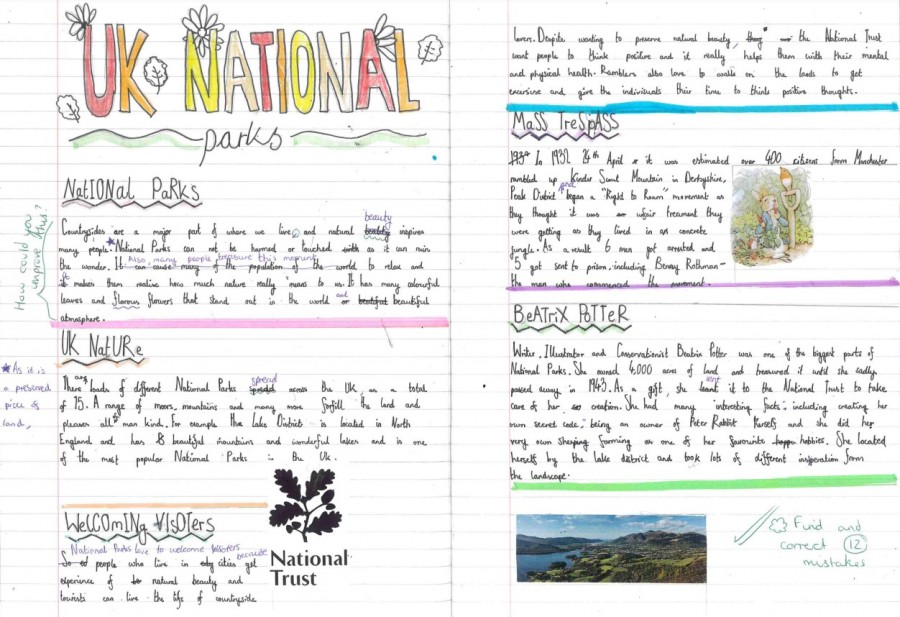
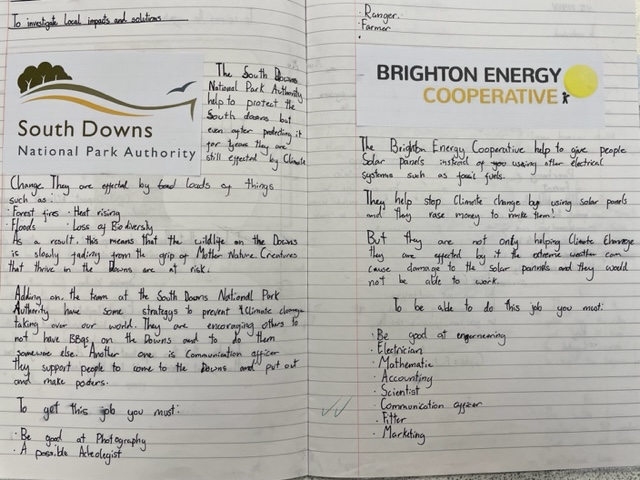
Outcomes in topic and literacy books, evidence a broad and balanced geography curriculum and demonstrate children’s acquisition of identified key knowledge relating to each of the identified national curriculum strands, as appropriate to key stage; locational knowledge, place knowledge and human and physical geography. This is in addition to the development and application of key skills, supported by fieldwork.
Each enquiry which forms our programme of learning and teaching in geography sets out clear objectives and outcomes for the pupils in terms of substantive and disciplinary knowledge and understanding and skills’ acquisition. These outcomes are listed as ‘end points of learning’ i.e. the criteria against which a pupil will be judged to be making good progress. Additional criteria define what ‘working at greater depth’ will entail. The approach we use also suggest a range of formative and ongoing ways in which a teacher can assess whether a pupil has achieved the appropriate end points of learning. We ensure that when assessing our pupils, evidence is drawn from a wide range of sources to inform the process including interaction with pupils during discussions and related questioning, day-to-day observations, practical activities such as model making and role play drama, the gathering, presentation and communication of fieldwork data and writing in different genres. The outcomes of each enquiry serve to inform the teacher’s developing picture of the knowledge and understanding of each pupil and to plan future learning or address gaps in learning accordingly. We do not make summative judgements about individual pieces of pupil work but rather use these formative assessments to build an emerging picture of what the pupil knows, understands and can do in relation to the end points of learning. Consequently, at the end of each enquiry, a teacher is able to make an informed and confident ‘best fit’ judgment as to whether the pupil is making good progress or working at greater depth.
As children progress throughout the school, they develop a deep knowledge, understanding an appreciation of their local area and its place within the wider geographical context. Geographical understanding, as well as children’s spiritual, moral, social and cultural development is further supported by the school’s local links with the South Down Rangers. The children also capitalise on cross-curricular events, including Climate talks from our families and European Languages Day.



Geography Learning Resources
- National Geographic Kids:
https://www.natgeokids.com/uk/teacher-category/primary-resources/
Activities and quizzes for children.
- Geography games:
https://world-geography-games.com/world.html
Geography gaming
