English
Intent
At Ditchling we believe that a quality English curriculum should develop children’s love of reading, writing and discussion and expose them to a variety of high quality texts and stimuli, as well as frequent, purposeful opportunities to practise and review key skills and apply new vocabulary. Our curriculum closely follows the aims of the National Curriculum for English 2014 to enable all children to:
- read easily, fluently and with good understanding
- develop the habit of reading widely and often, for both pleasure and information
- acquire a wide vocabulary, an understanding of grammar and knowledge of linguistic conventions for reading, writing and spoken language
- appreciate our rich and varied literary heritage
- write clearly, accurately and coherently, adapting language and style for a range of contexts, purposes and audiences
- use discussion in order to learn, showing an ability to elaborate and explain clearly their understanding and ideas
- become competent in the arts of speaking and listening, making formal presentations, demonstrating to others and participating in debate.
These aims are embedded across our English lessons and in the wider curriculum, where expectations of writing (including handwriting) are consistently high and children continue to develop speaking and listening skills while also being presented with a range of inspiring reading materials. Our provision, which follows a clear pathway of progression as it advances through the primary curriculum, enables children to confidently master the English language in all its modalities, as well as to appreciate and create literature. Research repeatedly highlights that ‘knowledge of language, which includes linguistic knowledge like vocabulary and grammar, as well as knowledge of the world for comprehension, underpins progression in spoken language, reading and writing’ (Ofsted, 2022), and therefore it is with clear intent that we prioritise progression and precision in knowledge of vocabulary, grammar and language forms and usage. It is our aim that, through our provision of hands-on experiences and explicit teaching of vocabulary and background knowledge, every child leaves Ditchling with a wealth of expressive and receptive vocabulary at their disposal, and the cultural capital to succeed far beyond the primary and secondary classroom.
Implementation
English is taught over multiple lessons every day and has the most time dedicated to it of any curriculum area. As well as daily reading (phonics) lessons, English (writing) lessons and discrete teaching of spelling and handwriting, the teaching of English is embedded across the curriculum.
Early Reading: Systematic Synthetic Phonics
Early reading is secured through use of the Read Write Inc scheme. Children are taught the alphabetic code (phoneme-grapheme correspondences). As well as teaching reading, this component knowledge supports spelling and letter formation, and structured activities within sessions are used to leverage this. Vocabulary and spoken language are also developed during RWI sessions, through comprehension and discussion of core and link texts. For their phonics sessions, children are grouped by book level/phonic knowledge in accordance with the scheme and work in small groups with a high adult-to-child ratio. Regular training and development days ensure that staff are equipped to teach with the expertise and skills required to promote excellent progress amongst our youngest children, as well as to develop their love of reading.
Reading Accelerated Reader
Once children have completed the RWI programme, they are supported on their reading journey through our implementation of Accelerated Reader. Children develop their fluency (accuracy, prosody, pace and expression) and comprehension through reading class texts and individual level books. Every class text uses texts more challenging than the child’s independent reading level book band to ensure every student is introduced to new vocabulary and that the greatest possible progress in reading occurs.
As reading for pleasure, reading widely, and reading independently are central to the implementation of our aims, each class has timetabled daily story times after lunch across the whole school. Book corners have literature colour coded using AR, helping our children to become more aware of their personal preferences and to take ownership over their reading identities. Our library (supported by our young librarians) has been developed to be an inviting and magical space to inspire reading.
Writing
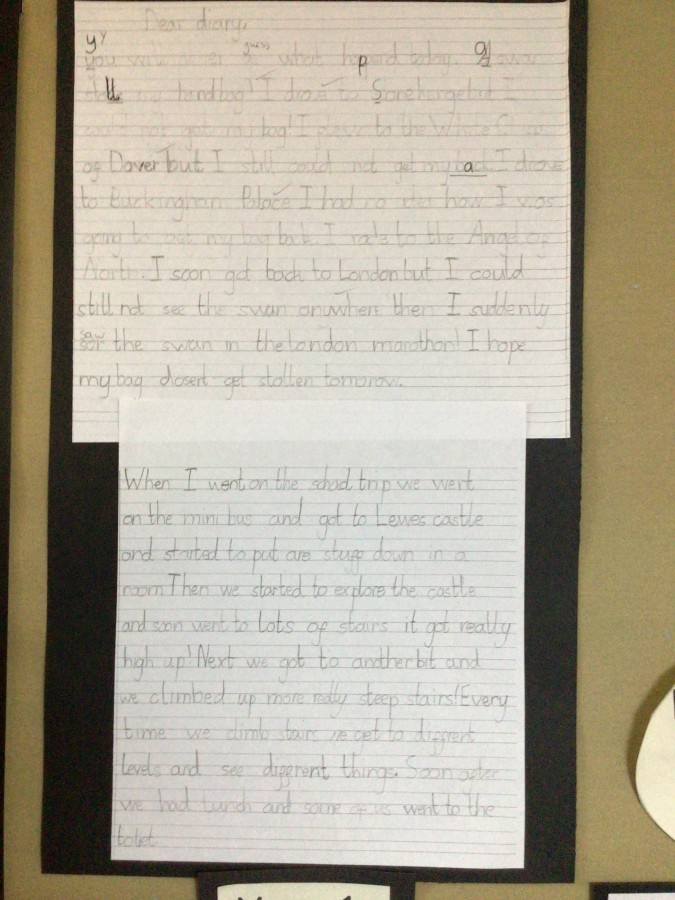
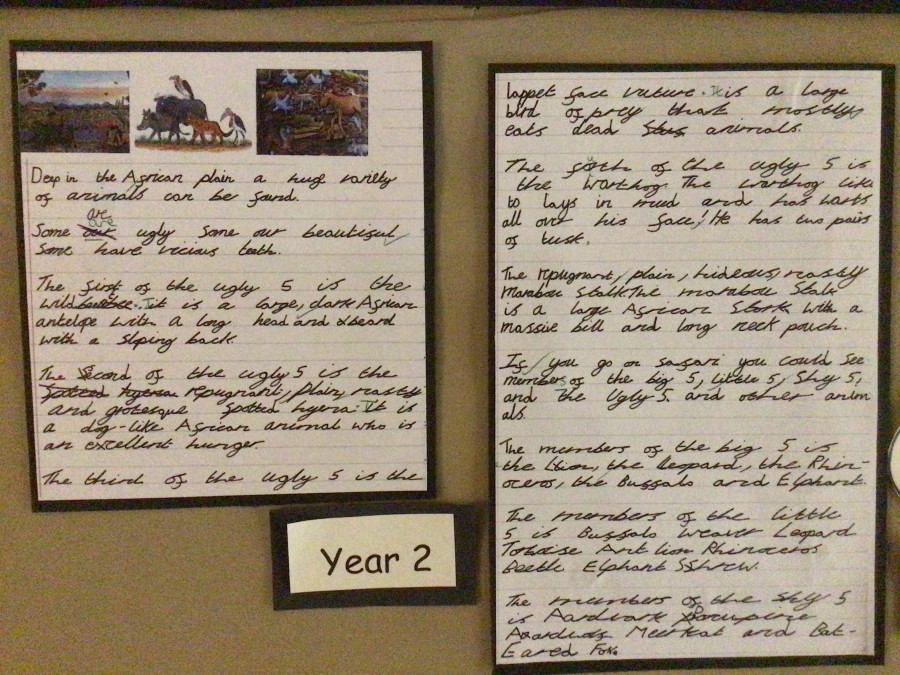
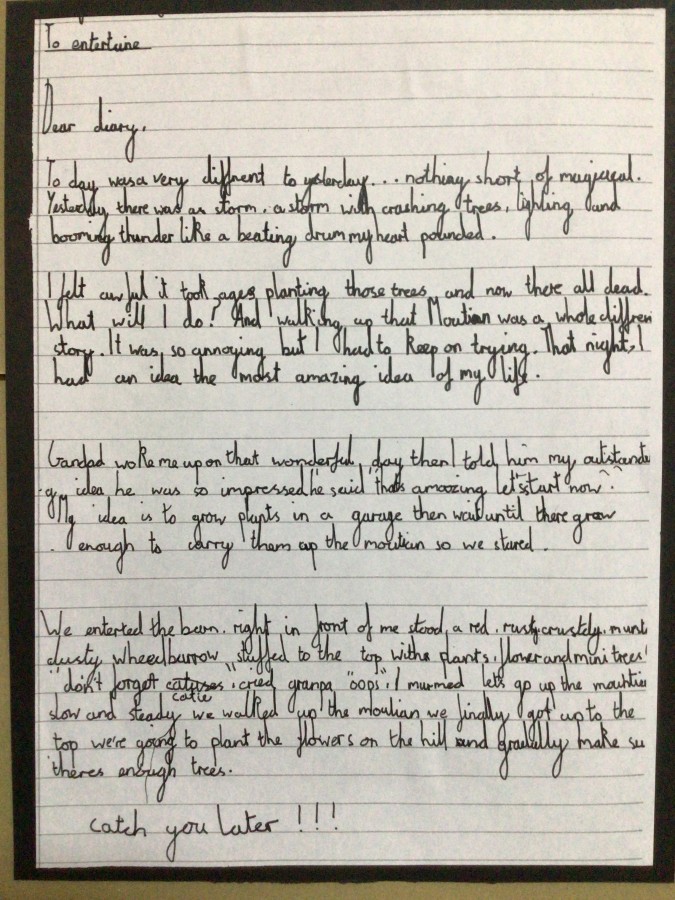
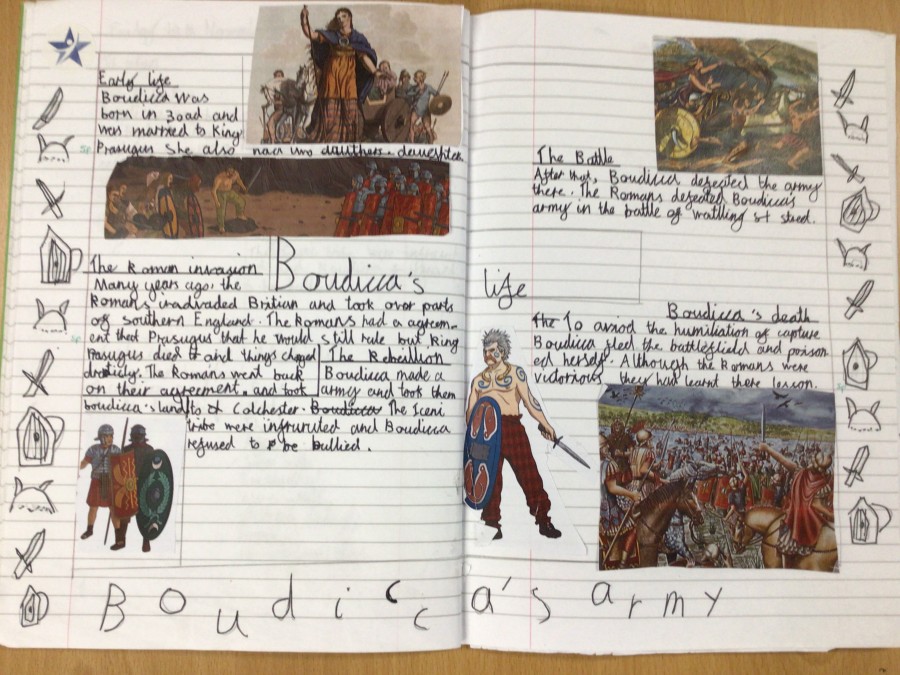
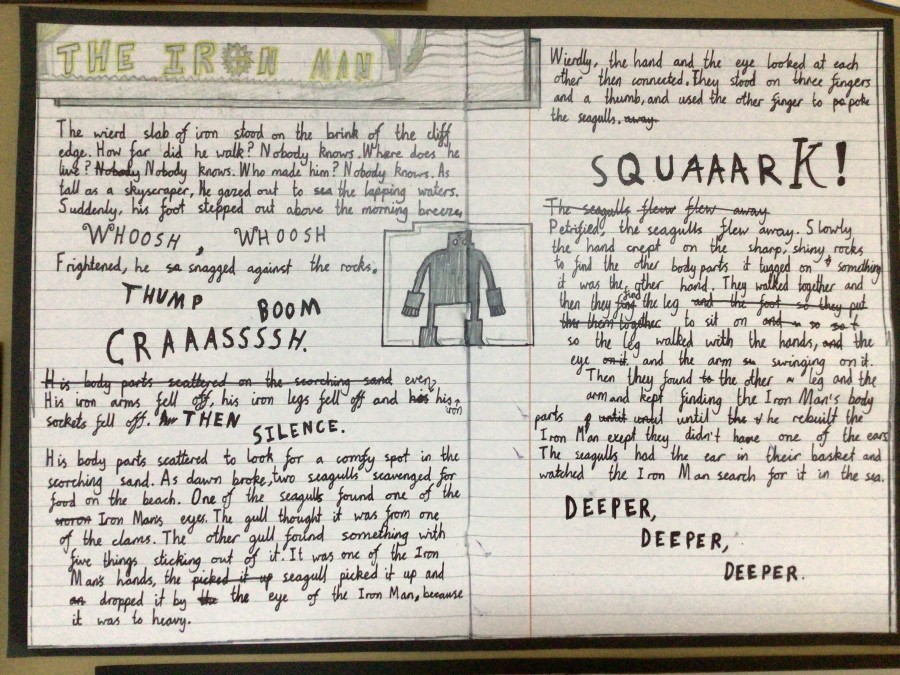
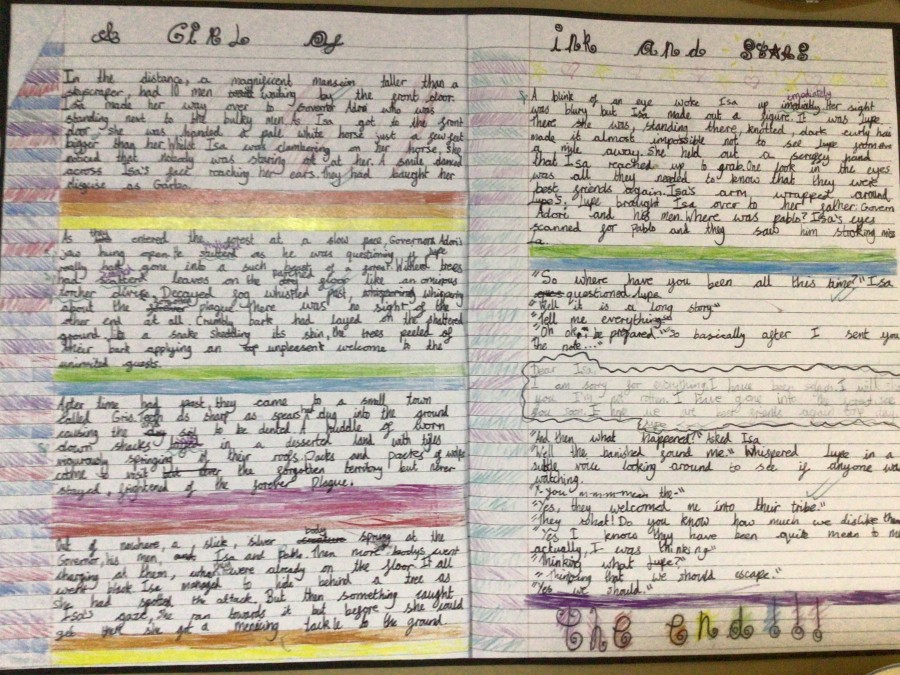
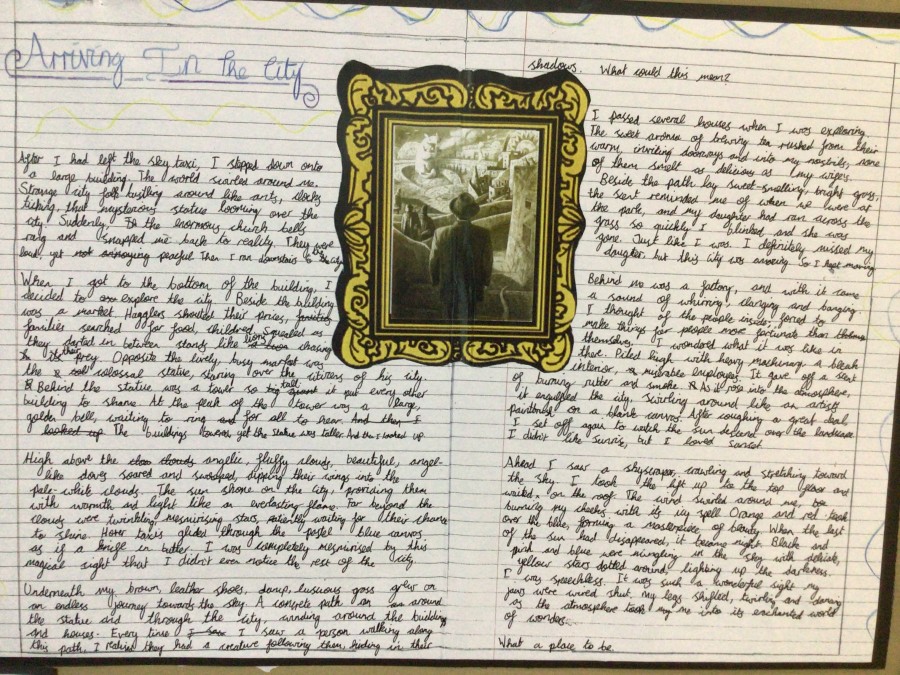
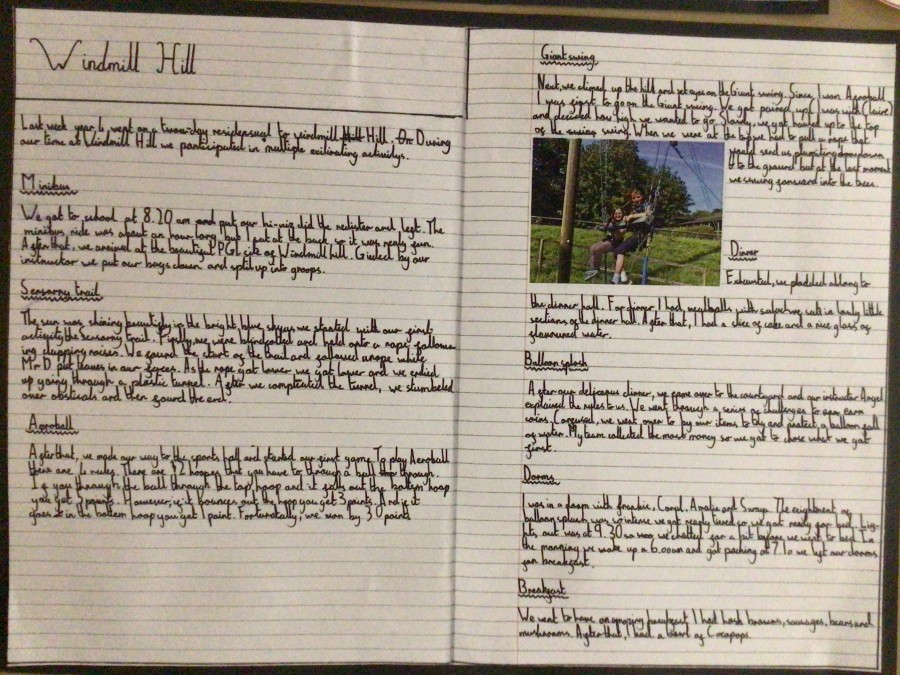
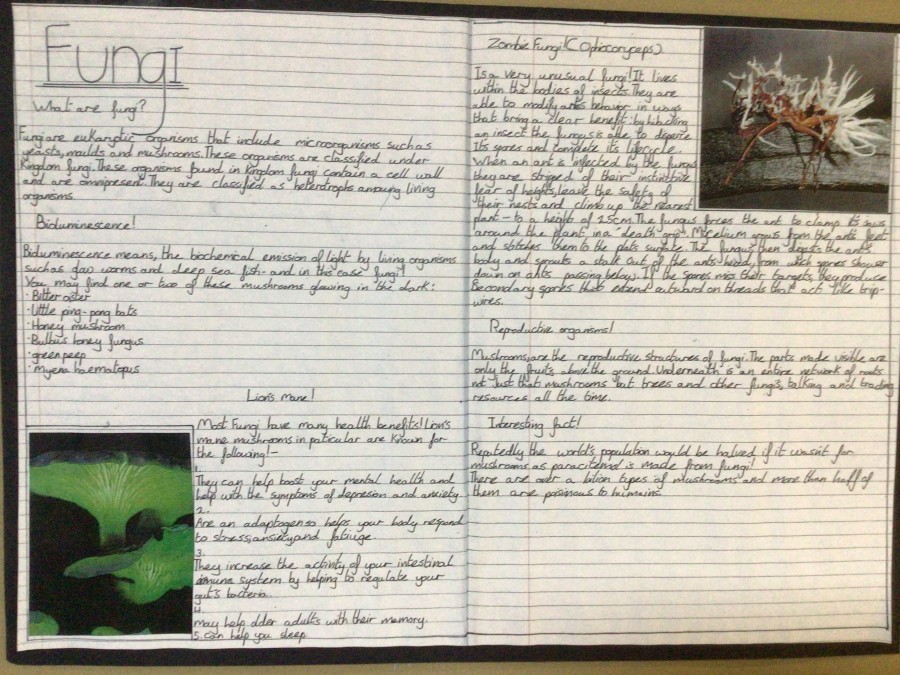
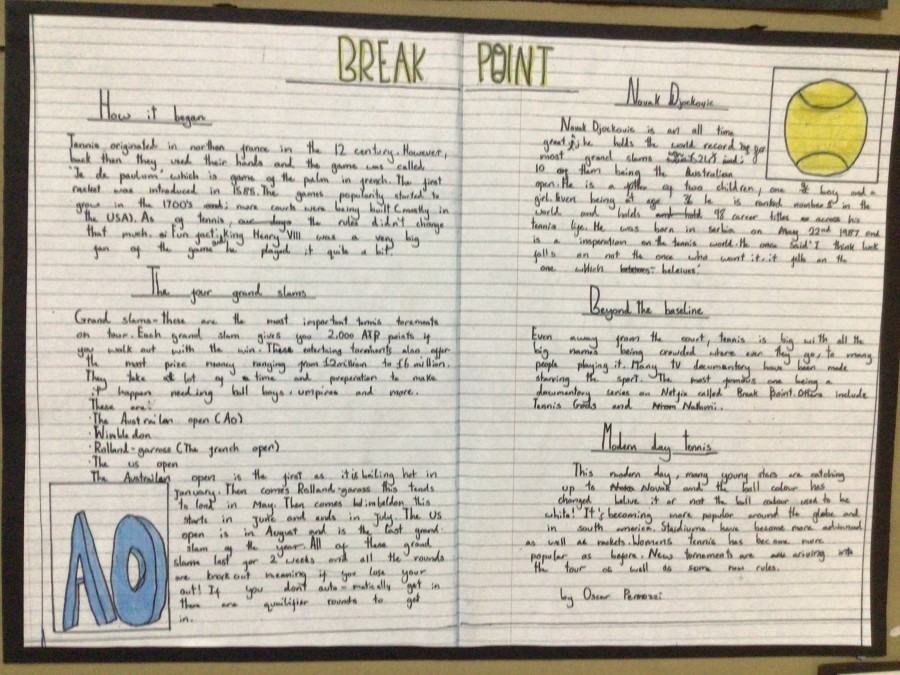
We deliver our teaching of writing using a bespoke approach to our school. A range of high-quality fiction, non-fiction and poetry is chosen for each year group, with cross-curricular links wherever possible, giving children purposeful and inspiring stimuli for writing as well as aspirational models to learn from. A balance of skills and inspiring models enables children to gain the knowledge, skills, vocabulary and experiences required to become masterful, creative and passionate writers. Handwriting and spelling, which are also taught in short discrete sessions, are another focus within English lessons. Our students are passionate about producing our unique double page spreads. Pupil voice found that students love to write and demonstrate their creativity using double page spreads as a vehicle for driving this love of writing.
Special events and competitions, such as World Book Day, poetry competitions writing workshops for our Key Stage 2 children, are part of our core offer and enrich our love of reading, writing and performing literature.
Impact
The impact of our English curriculum is a community of enthusiastic readers and writers, who enjoy showcasing their developing literacy knowledge and skills. Children are confident when encountering new vocabulary in their reading, and including it in their writing. Pupils support one another in their discussions and peer-review each other’s work, and are able to use the correct terminology when doing so, leading to productive conversations. Outcomes of work in both English and topic books evidence the high expectations of written work including double page spreads and selecting cross-curricular texts supports this writing as well as competencies across the curriculum. Children write successfully across a range of forms and adapt their writing considering the purpose and audience.
Children achieve highly in the phonics screening check, and at the end of the EYFS.
Attainment at the end of KS2 in reading and writing is above that of local schools and the National Average.
Writing across the curriculum from Nursery to year 6
-
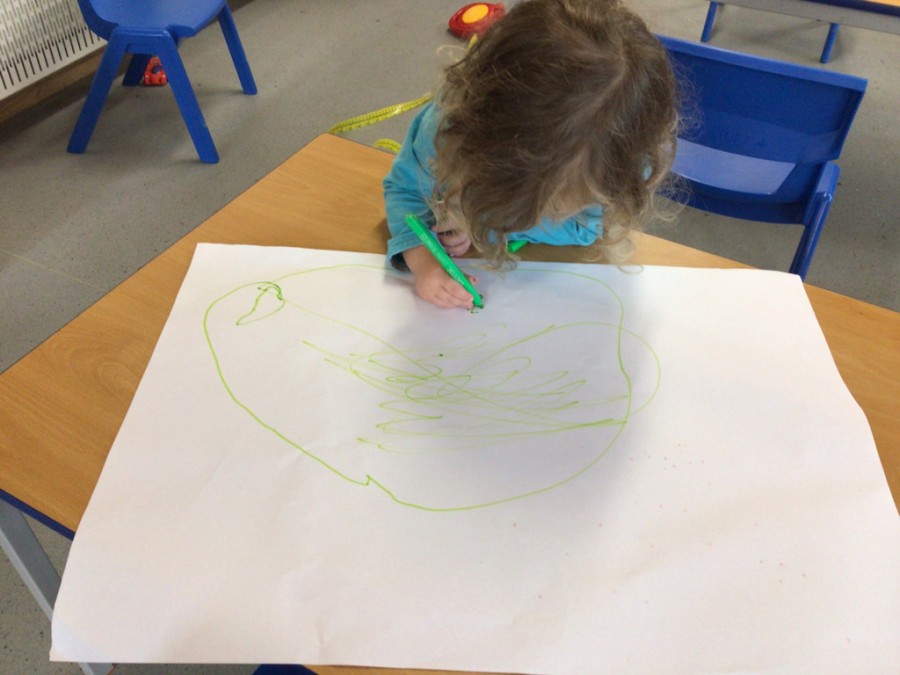
- Nursery
-
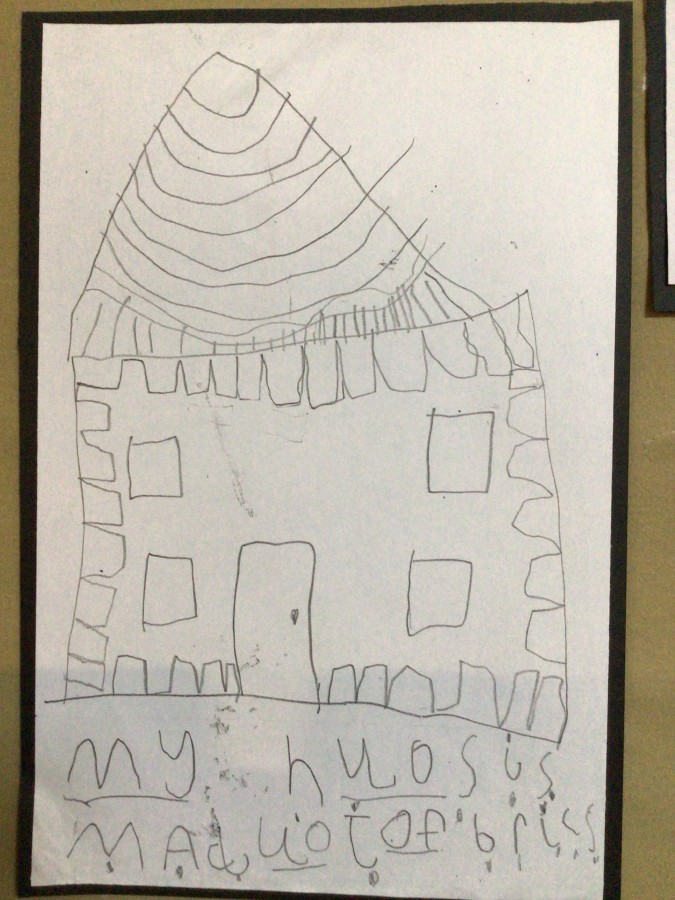
- Reception