Maths
Our Maths Lead is Mrs Jane Sayers who is a Lead Teacher for Sussex Maths Hub and for Hurst Education Trust

We are a Mastering Number School and use NCETM resources to support the teaching of maths.

Intent
The 2014 National Curriculum for Maths, and Early Years Foundation Stage Profile 2023/24, aims to ensure that all children:
- Become fluent in the fundamentals of Mathematics
- Are able to reason mathematically
- Can solve problems by applying their Mathematics
At Ditchling, to ensure whole consistency and progression, we use the nationally recognised NCETM (National Centre for the Excellence of Teaching in Maths) materials, supplemented by White Rose and Oak Academy, to deliver this curriculum. The required skills are embedded within Maths lessons and developed consistently over time. We are committed to ensuring that children are able to recognise the importance of Maths in the wider world, and that they are also able to use their mathematical skills and knowledge confidently in their lives in a range of different contexts. We want all children to enjoy Mathematics and to experience success in the subject, with the ability to reason mathematically. We are committed to developing children’s curiosity about the subject, as well as an appreciation of the beauty and power of Mathematics.
Our curriculum is intended to enable all children to successfully achieve the endpoints as stated in the 2014 National Curriculum for Maths Click here for more information
and in the Early Years Foundation Stage Profile: Click here for more information
Our Nursery uses the Early Years Development Matters Statements for Mathematics as the basis for their curriculum.
Implementation
The content and principles underpinning the 2014 Mathematics curriculum and the Maths curriculum at Ditchling reflect those found in high-performing education systems internationally, particularly those of east and south-east Asian countries such as Singapore, Japan, South Korea and China. The following principles and features characterise this ‘Mastery’ approach and convey how our curriculum is implemented:
- Teachers reinforce an expectation that all children are capable of achieving high standards in Mathematics.
- The large majority of children progress through the curriculum content at the same pace; significant time is spent developing deep knowledge of the key ideas that are needed to underpin future learning. This ensures that all can master concepts before moving to the next part of the curriculum sequence, allowing no pupil to be left behind.
- The structure and connections within the Mathematics are emphasised, so that pupils develop deep learning that can be sustained.
- Lesson design identifies: the new Mathematics that is to be taught; concrete, pictorial and abstract representations of this; the key points including specific vocabulary; the difficult points, common misconceptions and errors; real-life application/reasoning; a carefully sequenced journey through the learning encouraging fluency and including conceptual and procedural variation, making explicit any connections with previous learning. In a typical lesson, pupils sit facing the teacher and the teacher leads back and forth interaction, including questioning, short tasks, explanation, demonstration, and discussion.
- Practice and consolidation play a central role. Carefully designed variation within this builds fluency and understanding of underlying mathematical concepts.
- Teachers use precise questioning in class to test conceptual and procedural knowledge and assess children regularly to identify those requiring intervention, so that all children keep up.
- Children’s explanations and their proficiency in articulating mathematical reasoning, with the precise use of mathematical vocabulary, are supported through the use of stem sentences and generalisations provided by the teacher. These help the children to make connections and expose the structure of the maths.
Stem sentence example:
If I divide by ______, the greatest denominator I can have is______.
Generalisation example:
The length of one side of any square can be found by dividing its perimeter by 4.
Key fluency facts, such as multiplication tables and addition facts within 10, are learnt to automaticity to avoid cognitive overload in the working memory and enable pupils to focus on new concepts. Fluency is explicitly taught in Key Stage 1. It is also revisited in Key Stage 2 in fluency sessions. These sessions – taught via the NCETM Mastering Number programme take place four times a week – these take place in addition to the daily Maths lesson. These facts are taught in the sequence shown in the Mastering Number overviews below. Similarly, times tables are explicitly taught in Maths lessons up to Year 4. Additional times tables lessons may also be taught in Upper Key Stage 2. Chanting of times tables is planned from Year 2 upwards. These sessions take place three times a week.
The NCETM curriculum is a cumulative curriculum (see the ‘S’ plan later in this document), so that once a topic is covered, it is met many times again in other contexts. For example, place value is revisited in addition and subtraction and multiplication and division. The curriculum recognises the importance of children’s conceptual understanding of number. It is therefore designed to ensure that time is invested in reinforcing this to build competency. Lessons are planned to provide plenty of opportunities for reasoning and problem-solving elements. When introduced to a new concept, children have the opportunity to use concrete objects and manipulatives to help them understand what they are doing. Alongside this, children are encouraged to use pictorial representations. These representations can then be used to help reason and solve problems. Both concrete and pictorial representations support children’s understanding of abstract methods. Mathematical topics are taught in blocks, to enable the achievement of ‘mastery’ over time. These teaching blocks are broken down into smaller steps, to help children understand concepts better. This approach means that children do not cover too many concepts at once which can lead to cognitive overload.
“Children’s chances of success are maximised if they develop deep and lasting understanding of mathematical procedures and concepts.” (NCETM website)
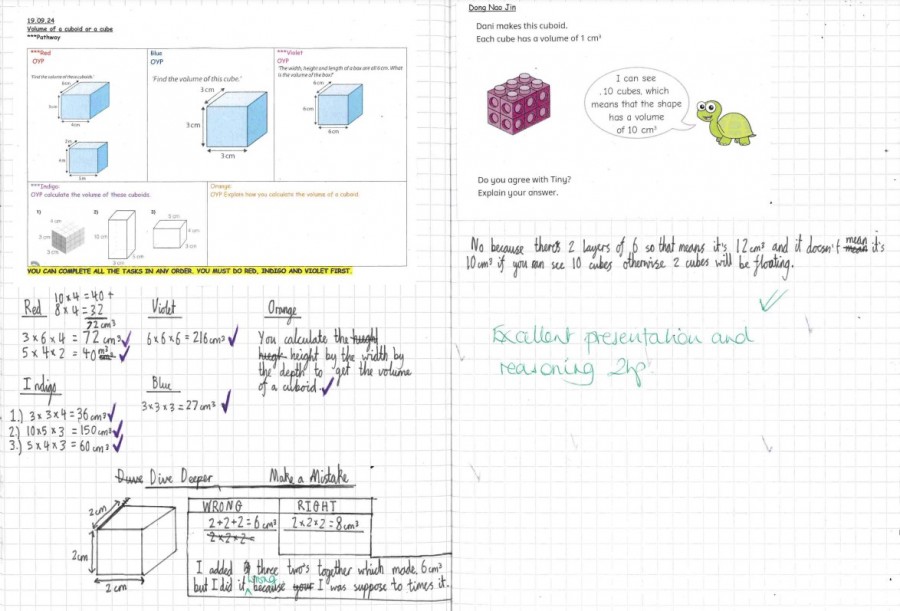
Each lesson phase provides the means for children to achieve greater depth, with children who are quick to grasp new content, being offered rich and sophisticated problems, ‘Solve its’ followed by ‘Dive Deepers’ and ‘Dong Nao Jins’ within the lesson as appropriate. We give ‘rapid graspers’ the opportunity to take part in ‘Pathways’ which the teachers ensure are available for those children who can master a quicker pathway through their learning in order to take part in the more challenging questions more quickly. For some children, there is the opportunity to take part in our bespoke Ditchling Challenge Booklets, offering a rich and broad set of activities linked to the learning. We are part of the Sussex Maths Hub and continue leading on new initiatives and furthering our staff CPD to ensure we offer an excellent curriculum.
In all classes there are children of differing mathematical ability, including Gifted and Talented and SEND children. We recognise this fact and provide suitable learning opportunities for all children by using a range of scaffolding strategies to ensure all children are able to understand the new learning.
This must include the use of:
– Appropriate resources including ‘help sheets’
– Adult support
– Working wall resources
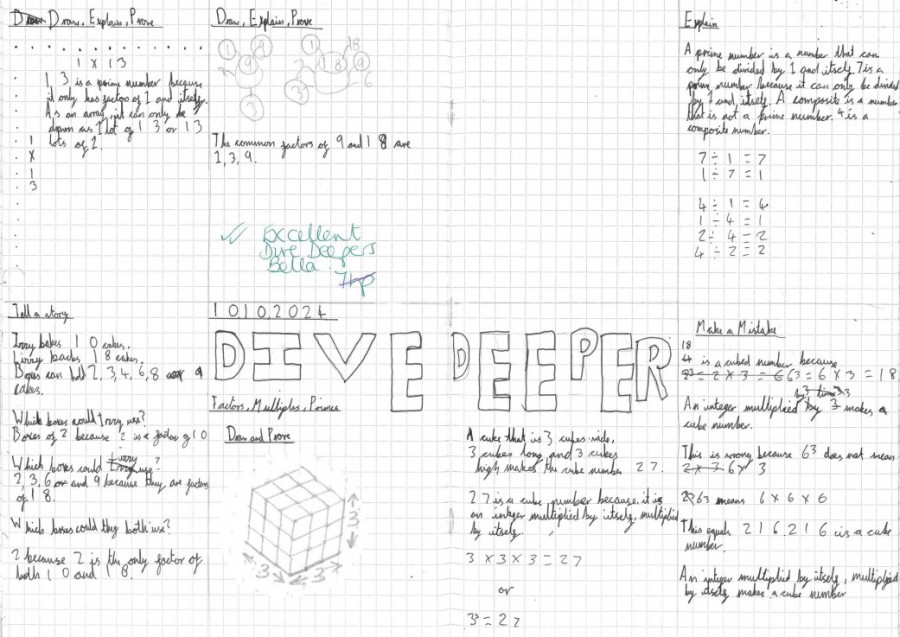
‘Dive Deeper’ lessons are also taught at least three times a year (in Terms 1, 3 and 5) to give children the opportunity to consolidate their learning over the previous two terms. The children may present their work as a double-page spread.
In addition, problem-solving lessons are taught at least three times a year. These are taught using the four stages of the problem-solving process:
Stage 1: Getting started
Stage 2: Working on the problem
Stage 3: Digging deeper
Stage 4: Reflecting
(Teachers should refer to the NRICH website for further details: https://nrich.maths.org/articles/developing-excellence-problem-solving-young-learners )
By explicitly drawing children’s attention to these four stages, and by spending time on them in turn, we can help children become more confident problem-solvers. Once they have got going and are working on the problem (stage 2), children should be taught to make use of these problem-solving skills:
Trial and improvement
Working systematically
Pattern-spotting
Working backwards
Reasoning logically
Visualising
Conjecturing
(The first two in this list are particularly important.)
As learners progress towards a solution, they may take the mathematics further (stage 3) and two more problem-solving skills become important:
Generalising
Proving
Having reached a solution, stage 4 of the process should then involve children explaining their findings and reflecting on different methods used.
(Resources from the NRICH website should be used to teach these lessons: https://nrich.maths.org/articles/using-nrich-tasks-develop-key-problem-solving-skills )
“Mastery of facts, procedures and concepts needs time; time to explore the concept in details and time to allow for sufficient practice to develop fluency” and “one set of mathematical concepts and big ideas for all. All pupils need access to these concepts and ideas and to the rich connections between them.” (Pages 5 and 6) NCETM, Teaching for Mastery.
Home learning in Maths is based on:
– Mathletics (an online platform through which weekly tasks are set for children linked to their learning in class)
– our Mount Titan Times Tables Scheme which is a progressive system for children to learn, and develop fluency in, their times tables and associated facts. Times tables are tested weekly in class from Year 2 upwards. If children pass their current stage (17 out of 20, 37 out of 40, or 57 out of 60 tables facts recalled in 4 minutes, depending on ability) then they move on to the next stage until they reach ‘The Summit’.
Impact
The school has a supportive ethos and our approaches enable children to develop their collaborative and independent skills, as well as empathy and the need to recognise the achievement of others. Students can underperform in Mathematics because they think they cannot do it, or are not naturally good at it. The school’s use of NCETM Maths addresses these preconceptions by ensuring that all children experience challenge and success in Mathematics through excellent quality first teaching. Regular and ongoing assessment (using the NCETM Ready to Progress materials throughout each unit and Rising Stars test in Terms 2, 4 and 6) informs and supports teaching, as well as intervention, to support and enable the success of each child. These factors ensure that we are able to maintain high standards, with achievement at the end of KS2 well above the national average, as well an increasingly high proportion of children demonstrating greater depth, at the end of each phase.
Staff at Ditchling take part in the professional development programme via the Sussex Maths Hub and the school will continue to benefit from the expertise through our Maths Subject Leader.

Tables Test 20q 40q 60q Final Version (Oct 2020)
Resources to use at home:
Click on the resources below



 – select your child’s year group
-
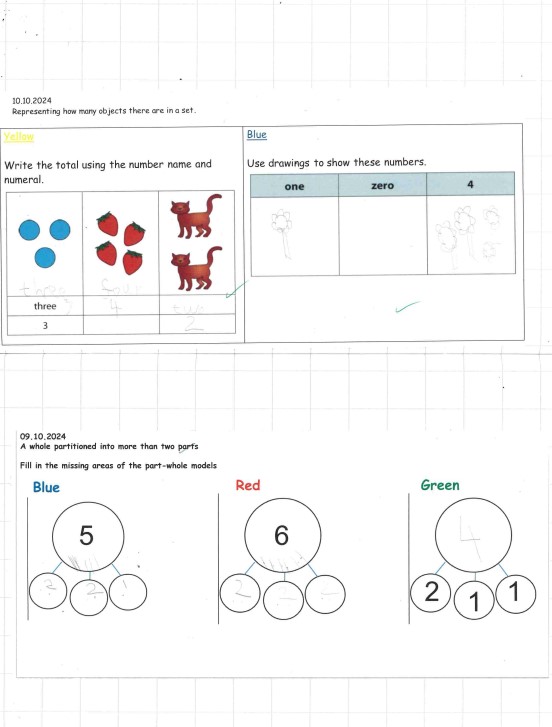
- Year 1
-
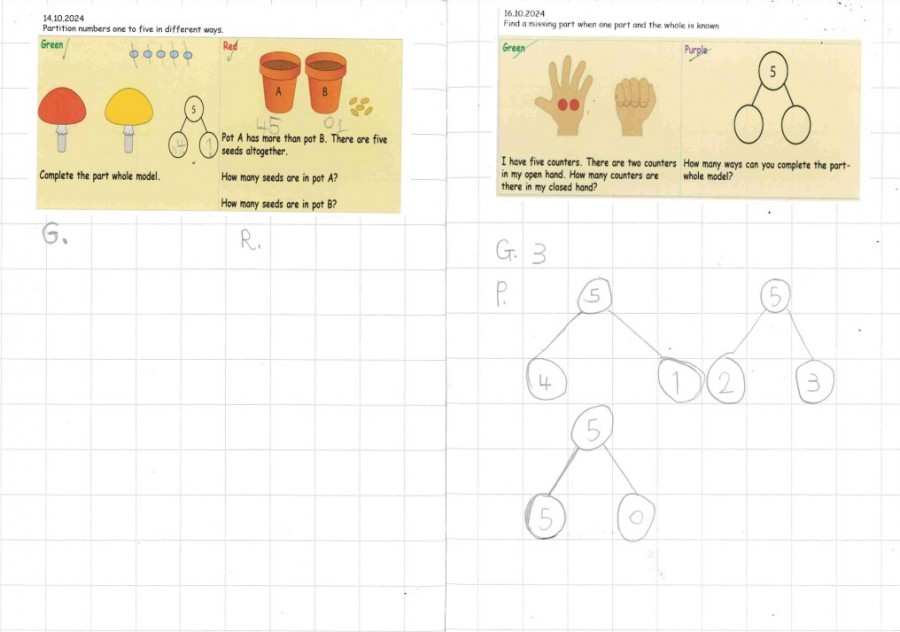
- Year 1
-
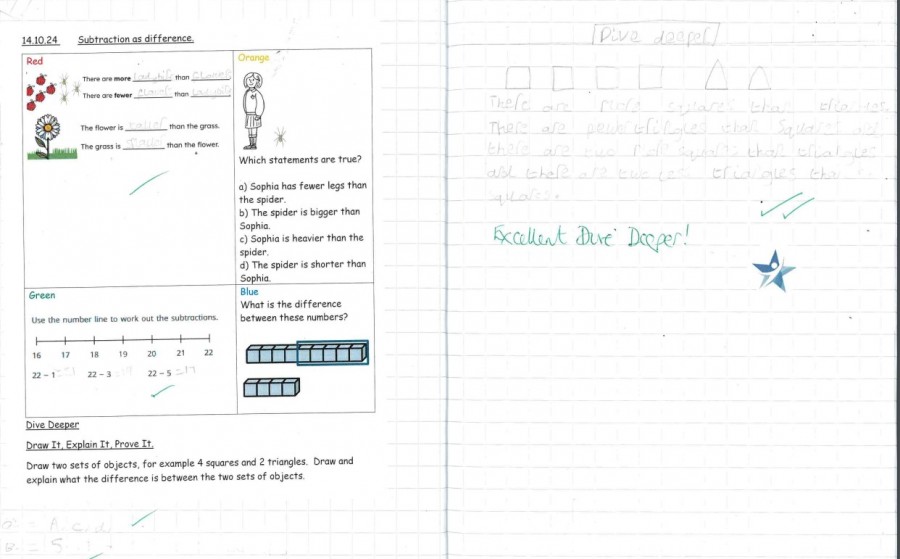
- Year 2
-
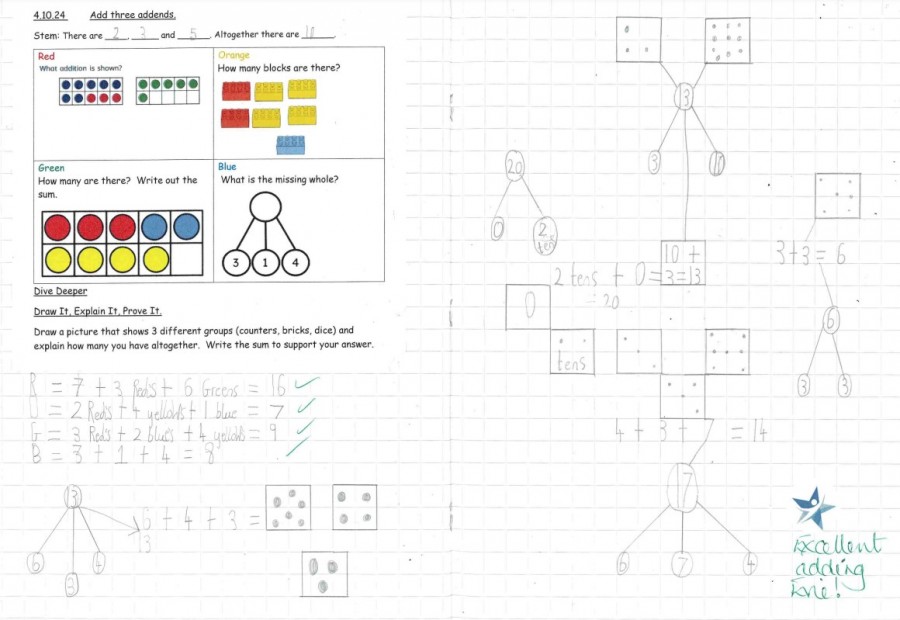
- Year 2
-
- Year 5
-
- Year 5
-
- Year 6
-

- Year 6
